Science

The research behind Formyra

Lab results, key numbers and the publications they come from.

What we make

From particle to product

Examples from our lab work on vaterite particles, coatings and composites.
Scientific foundation

Twenty years of peer-reviewed research

Formyra builds on vaterite research led by Dr Bogdan Parakhonskiy at Ghent University, covering synthesis, loading, release, sorption and templating of CaCO₃ particles.

50+publications on vaterite and CaCO₃ composites
0.3–10 µmreproducible particle size control
>85%vaterite phase in fast room-temperature synthesis[5,6]
≈1 mg/mgloading capacity for active molecules
Publications

Sources

  1. Parakhonskiy B.V., Haase A., Antolini R. Sub-micrometer vaterite containers: synthesis, substance loading, and release. Angew. Chem. Int. Ed. 51, 1195 (2012). doi:10.1002/anie.201104316
  2. Svenskaya Y.I. et al. Key parameters for size- and shape-controlled synthesis of vaterite particles. Cryst. Growth Des. 18, 331 (2018). doi:10.1021/acs.cgd.7b01328
  3. Savelyeva M.S. et al. Vaterite coatings on electrospun polymeric fibers for biomedical applications. J. Biomed. Mater. Res. A 105, 94 (2017). doi:10.1002/jbm.a.35870
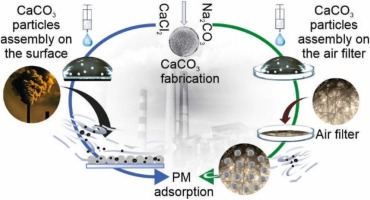
  4. Eftekhari K. et al. PM2.5 and PM10 adsorption onto filters and surfaces functionalized with calcium carbonate particle assembly. Colloids Surf. A 680, 132617 (2024). ScienceDirect
  5. Svenskaya Y.I. et al. Ultrasonically assisted fabrication of vaterite submicron-sized carriers. Adv. Powder Technol. 27, 618 (2016).
  6. Song J., Parakhonskiy B.V. et al. Energy transfer influence on superfast calcium carbonate synthesis: using microwave heating, ultrasound cavitation and mechanical stirring. J. Mater. Res. Technol. (2025).